
How do professional balloon manufacturers maintain color consistency across batches?
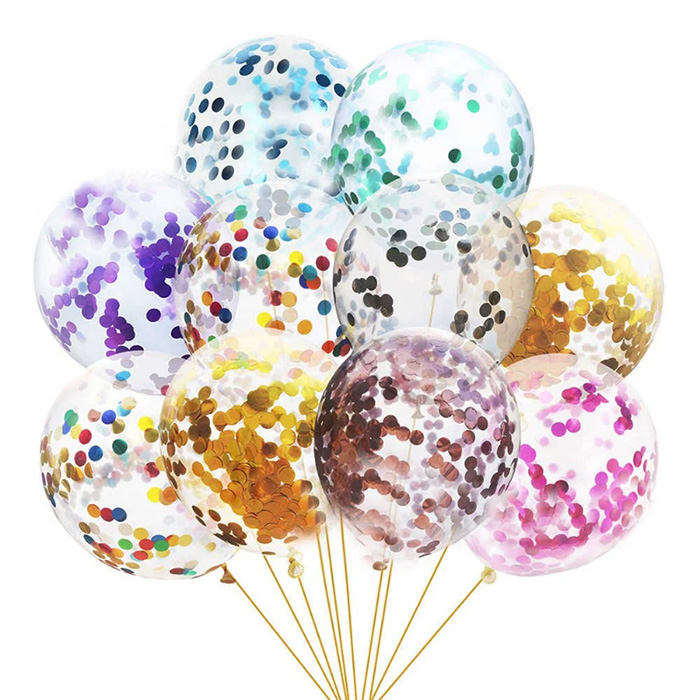
Professional balloon manufacturers achieve sub-1.0 Delta E variance by stabilizing natural rubber latex (NRL) colloids at 9.5-11 pH and 45-55% relative humidity. They utilize 0.5-2.0 micron pigment dispersions, X-Rite spectrophotometry for 99.7% reproducibility, and automated gravimetric dosing accurate to 0.01g. Batch consistency relies on neutralizing seasonal latex yellowing with 2-5% Titanium Dioxide ($TiO_2$) before applying computerized color matching (CCM) to counter the 12% thermal darkening observed during 120°C vulcanization.
Raw latex arrives from plantations with variable TSC (Total Solid Content) levels, often fluctuating between 60% and 62% depending on the rainfall during the tapping season. This 2% variance in solids changes how light passes through the finished balloon wall, making the starting material a moving target for chemists. To fix this, balloon manufacturers use industrial centrifuges to standardize the dry rubber content (DRC) to a strict 60.0% tolerance before any pigment is introduced to the mixing tank.
Standardization of raw material ensures that the refractive index of the polymer remains constant, preventing the "cloudy" effect that ruins translucent jewel-tone batches.
Once the base is stable, the focus shifts to the pigment grind, where organic dyes like Phthalocyanine Blue or Azo Red are processed in horizontal bead mills for 24-48 hours. A sample size of 500ml is drawn every six hours to check particle size distribution, ensuring that 98% of the particles fall under the 2-micron threshold. Large particles create "hot spots" of color or pinholes, while particles that are too fine will migrate to the surface, causing a chalky residue known as blooming.
Properly milled pigments are then fed into an automated gravimetric dispensing system that bypasses manual pouring errors entirely. These systems use load cells capable of measuring 500kg batches with a precision of 10 grams, maintaining a mixing ratio accuracy of 99.98% across consecutive production runs. This level of precision is necessary because a deviation of just 0.05% in a carbon black additive can turn a deep charcoal balloon into a flat, muddy grey.
| Variable | Target Range | Impact on Color |
| Slurry pH | 10.2 - 10.8 | Prevents pigment "crashing" or coagulation |
| Viscosity | 80 - 120 cps | Controls film thickness and opacity |
| Temperature | 22°C - 25°C | Stabilizes chemical reaction rates |
Maintaining the slurry at 10.5 pH prevents the pigments from settling at the bottom of the tank, a phenomenon called sedimentation which accounts for 15% of color failures in unmonitored lines. Continuous low-shear agitation at 30 RPM keeps the mixture homogenous without introducing air bubbles that would otherwise create micro-voids in the color. This stability is the prerequisite for the dipping stage, where the physical thickness of the latex determines the final visual density.
Precision in dip-tank dwell time, measured in milliseconds, ensures the balloon wall maintains a thickness of 0.20mm, as a 5% decrease in thickness leads to a visible loss in color saturation.
The coagulant-coated formers enter the latex bath at a controlled speed of 150mm per second to prevent ripples that cause uneven color pooling. During this phase, ambient humidity must stay at 50% because moisture levels above 60% slow down the "gelation" process, causing the pigment to drift toward the neck of the balloon. Manufacturers track these environmental metrics in real-time, adjusting the extraction fans every 15 minutes to keep the drying curve within a 1% deviation.
Vulcanization follows the dipping, where the balloons travel through multi-zone ovens ranging from 70°C to 120°C to cross-link the rubber molecules. High temperatures often cause "heat tinting," where the chemical accelerators like Zinc Diethyldithiocarbamate (ZDEC) react with the pigments and darken the hue by approximately 8%. To counter this, lab technicians develop "over-compensated" formulas that appear slightly too bright in the wet stage but hit the exact target coordinate after the 20-minute bake cycle.
Testing protocols involve taking five samples from the start, middle, and end of a 100,000-unit run to verify chromatic alignment.
Each sample is inflated to its rated diameter—typically 11 inches—and placed inside a MacBeth light booth to check for metamerism under D65 daylight and TL84 store lighting. A spectrophotometer captures the $L*a*b*$ color space values, comparing them against a digital "Golden Sample" stored in the cloud. If the $b*$ value (the yellow-blue axis) drifts by more than 0.5 units, the automated dosing system for the next batch is updated to include a micro-shot of corrective violet toner.
This feedback loop relies on massive data sets, with top-tier facilities logging over 1,000 data points per hour regarding tank temperature, chemical purity, and oven airflow. By analyzing the 2024 production data, many plants have moved toward "pre-compounded" latex, where the color is integrated at the supplier level to reduce on-site variables. This shift has decreased the average color-matching time from 4 hours down to just 15 minutes, allowing for rapid scaling without sacrificing the visual identity of the brand.