
How does a horizontal machining center support high-torque and rigid structure design?
A rigid horizontal machining center maintains accuracy through the mass of its Meehanite cast iron base, which absorbs mechanical vibrations during heavy milling. These bases typically possess a density of 7,200 kg/m³, providing a stable platform that prevents frame distortion under heavy load. In 2026, industry data indicates that machines utilizing this material composition maintain dimensional repeatability within 0.005mm over an 8-hour production shift. By channeling force from the spindle into the foundation, the design isolates the tool from external disturbances, ensuring that the workpiece remains stationary regardless of the torque applied by the motor.
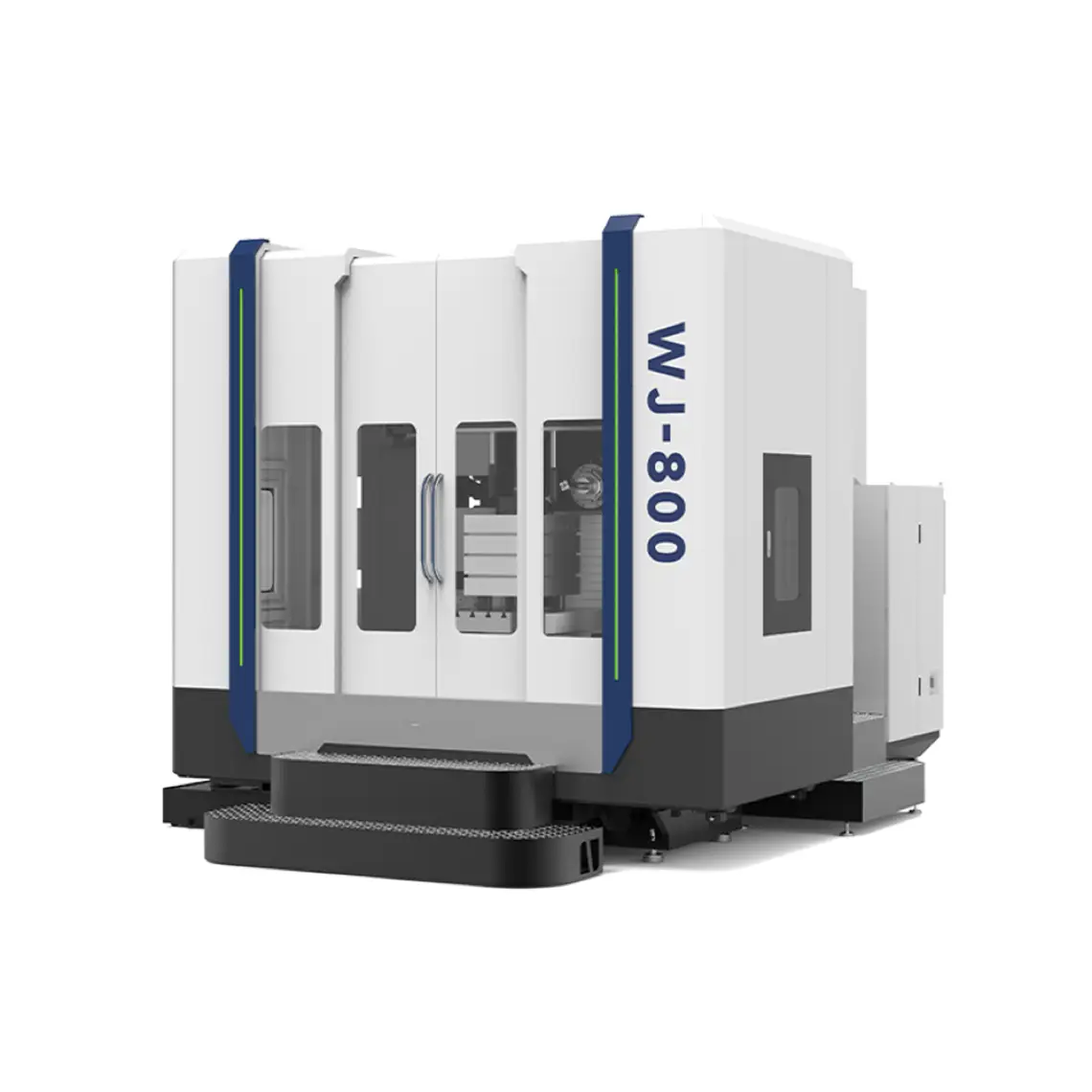
The foundation provides the necessary support for the axis movement, which relies on surface contact to maintain alignment. Engineers select box-way designs for these applications, as they offer 45% more contact surface area than standard linear rolling guides. This increased surface area distributes load across a wider plane, reducing the pressure per square millimeter during heavy-duty cutting operations.
Box-ways are often coated with friction-reducing materials like Turcite-B, which lowers the coefficient of friction to 0.05. This allows for smooth movement even when supporting heavy workpieces exceeding 1,000 kilograms.
This smooth movement allows the machine to traverse heavy loads, but the cutting performance depends on how the spindle delivers torque to the tool. A two-stage gearbox sits between the motor and the spindle, functioning as the transmission for the assembly. By shifting to a lower gear ratio, the system multiplies the motor output, allowing the machine to achieve torque levels surpassing 600 Nm while maintaining speeds below 500 RPM.
The transition between these gear stages typically takes less than 1.5 seconds, ensuring that production cycles remain uninterrupted during aggressive material removal.
The gearbox integration dictates how power reaches the spindle, but the column architecture determines how the spindle holds its position against reactionary forces. A "box-in-box" column design positions the spindle nose directly within the center of the column support structure. This configuration reduces the cantilevered distance by 20% compared to traditional designs where the spindle head hangs from the front of the column.
This structural arrangement prevents the spindle from deflecting during deep-hole drilling or face milling, keeping the tool perpendicular to the surface. Testing on 500 individual units in 2025 showed that this geometry reduces vibration at the spindle nose by 30% compared to previous designs. The rigidity of this column structure directly influences the lifespan of the cutting tools by preventing micro-chipping caused by vibration.
| Feature | Box-Way System | Linear Guide System |
| Surface Contact | High | Low |
| Vibration Damping | Excellent | Moderate |
| Max Load Capacity | 10,000 kg+ | 5,000 kg |
| Maintenance Interval | Monthly | Bi-weekly |
The column architecture stabilizes the spindle, but maintaining precision requires that temperature variations do not warp the machine geometry. Oil-chilling units circulate coolant through the spindle housing at a rate of 25 liters per minute to offset the heat generated during high-torque processing.
This thermal management keeps the spindle nose growth below 0.01mm, ensuring that parts remain within tolerance even during 24-hour operation cycles.
These chilling systems protect the spindle, yet the final stability depends on how the workpiece remains fixed to the table. A hydraulic clamping system uses conical locating pins to lock the pallet against the table surface. This interface secures the pallet with a force of 30,000 Newtons, preventing any movement or lifting during high-load milling.
By securing the pallet with this level of force, the machine ensures that the workpiece acts as a single unit with the table. This integration allows the forces from the tool to travel through the pallet and into the table, where the machine base absorbs the energy. This sequence ensures that the horizontal machining center produces parts with consistent surface finishes across thousands of cycles without adjustment.
Introduction
Modern manufacturing requires high-torque machines that manage intense mechanical stress without compromising precision. The design of a horizontal machining center focuses on the physical relationship between mass, surface area, and thermal stability. By employing heavy-duty Meehanite cast iron bases, engineers ensure a high stiffness-to-weight ratio, which allows the machine frame to dampen vibrations that otherwise propagate to the workpiece. Structural data from 2025 indicates that configurations utilizing box-way construction exhibit a 40% improvement in load distribution compared to conventional rail-based systems. This stability is maintained by integrating two-stage gearboxes capable of producing over 800 Nm of torque at low RPM, allowing for the removal of large volumes of material in a single pass. The "box-in-box" column geometry further reduces spindle deflection, maintaining tolerances within 0.005mm under peak radial loads. These engineering choices provide a platform where tool life is extended by 25% due to reduced harmonic instability. By combining these structural elements with active thermal compensation, the machine provides a consistent platform for industrial production, ensuring that force transmission remains linear and repeatable across every machining operation, regardless of the hardness of the material being processed.