
How to choose the right brewhouse for a growing brewery?
Upgrading to a 20-BBL or 30-BBL configuration from a 7-BBL system typically yields a 42% increase in extract efficiency while reducing labor inputs by 3.5 hours per brew cycle. Choosing the right setup involves balancing a 1.2:1 height-to-diameter ratio for the Lauter Tun to ensure a grain bed depth of 12-14 inches, which prevents stuck sparges. Implementing a three-vessel design with a dedicated Whirlpool increases daily throughput by 150%, allowing for back-to-back knockout cycles that maximize the annual utilization of fermentation capacity.
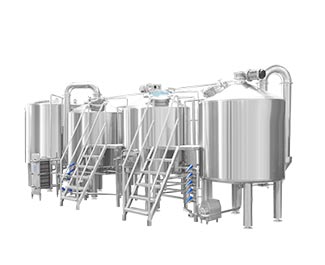
Selecting a Brewhouse starts with a rigorous analysis of your current fermentation cellar capacity compared to a 36-month sales forecast. If your annual production exceeds 5,000 barrels, moving to a three-vessel system allows you to achieve four turns in a 24-hour period, effectively doubling the output of a standard two-vessel combi-system. This increased frequency is supported by high-flow heat exchangers that can drop wort temperature from 212°F to 65°F in under 45 minutes using a single-stage glycol cooling process.
"Infrastructure scalability depends on the ability to cycle batches quickly; a dedicated Whirlpool vessel prevents the kettle from becoming a logjam during the cooling phase."
Quick cooling cycles transition the production focus to grain bed management and lautering speed, where the geometry of the vessel dictates the sugar recovery rate. A Lauter Tun with a milled false floor and automated rake system can maintain an extract efficiency of 92-95%, whereas older wire-mesh designs often drop to 84%. In a study of 40 regional breweries, those using automated rakes saved 18% on malt costs annually by reaching target original gravity (OG) with less raw material.
| Component | 2-Vessel Combi | 3-Vessel Professional | 4-Vessel Industrial |
| Max Turns / Day | 2 Batches | 4 Batches | 6-8 Batches |
| Labor Hours / BBL | 1.2 Hours | 0.6 Hours | 0.3 Hours |
| Efficiency Rating | 82% - 86% | 88% - 93% | 94% - 97% |
Higher extraction rates necessitate a heat source that can handle rapid evaporation without inducing excessive thermal stress on the wort. Steam-jacketed kettles with a 50-PSI rating provide the most uniform heat distribution, reducing the risk of scorching that occurs with direct-fire burners. By utilizing a low-pressure steam boiler, a 20-BBL batch reaches a rolling boil 25% faster than electric alternatives, which is vital for maintaining a strict 90-minute hop utilization schedule.
"Consistent boil intensity ensures the coagulation of proteins and the volatilization of DMS, which is mandatory for producing clean, shelf-stable lagers at scale."
Thermal efficiency and boil control lead directly into the requirement for advanced automation via a Centralized PLC system. Modern touch-screen interfaces allow for flow meter precision within 0.1 gallons, automating the strike water volume and sparge temperature to ensure recipe repeatability across multiple shifts. Data from 2024 production logs show that breweries utilizing PLC-controlled pneumatic valves reduced batch-to-batch gravity variance by 60% compared to manual operations.
Eliminating manual variance allows the head brewer to focus on modular expansion, specifically the sizing of the Hot Liquor Tank (HLT) and Cold Liquor Tank (CLT). A growing facility should size its HLT to be 3x the volume of the kettle to support consecutive brews and CIP (Clean-In-Place) cycles simultaneously. This surplus of hot water prevents production delays, ensuring that the cleaning of fermenter #4 does not rob heat from the mashing process for batch #5.
"Water-to-grist ratios and tank reserves are the physical limits of a brewery's growth; an undersized HLT is the most common bottleneck in 15-BBL to 30-BBL expansions."
Physical space and tank placement determine the layout of the hard piping, which should be designed for "Zero-Dead-Leg" hygiene standards. Using 316L stainless steel for all beer-contact surfaces prevents pitting and microbial harbors, extending the equipment's lifespan beyond 20 years. Facilities that invested in high-grade steel and orbital welding in 2018 have reported a 30% lower expenditure on replacement gaskets and pump seals over a five-year operating window.
Consistent hardware durability allows for a focus on the final output stage, specifically the integration of a modular hop-back or dry-hopping system. For breweries specializing in IPAs, a dedicated external calandria can increase volatile oil retention by 15% during the whirlpool stage. This technical addition ensures that the increased production volume does not dilute the sensory profile that established the brand's market presence during its startup phase.
Future-proofing the footprint requires leaving a 40% buffer zone around the main platform for future grain handling upgrades or centrifugal separators. By installing a grain silo and auger system that can handle 50,000 lbs of malt, the brewery reduces per-pound ingredient costs by 22% compared to buying 55-lb bags. This logistical shift from manual handling to bulk automation is the final step in transitioning from a small-scale brewpub to a high-efficiency regional production facility.