
What should engineers know about pcb etching?
Engineers must treat PCB Etching as a high-precision chemical machining process where an etch factor of 3.5 or higher is required to maintain impedance within a ±5% tolerance. In 2026, high-density interconnect (HDI) designs utilize Modified Semi-Additive Processes (mSAP) to achieve trace widths below 35 μm, reducing lateral undercut by 85% compared to traditional subtraction. Controlled spray pressures of 1.5 to 2.8 bar and automated titration maintaining the oxidation-reduction potential (ORP) within ±5 mV are necessary to prevent signal attenuation in 5G and aerospace hardware.
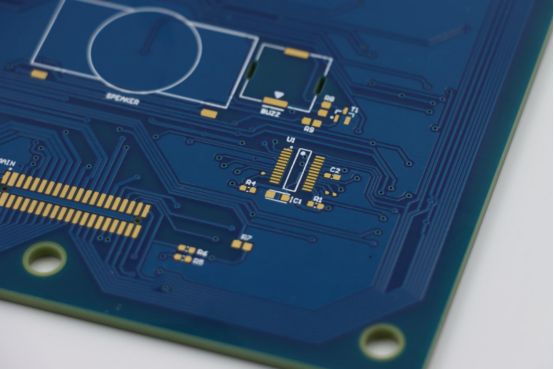
The transition from a digital design to a physical copper pattern involves fluid dynamics that determine the final cross-sectional area of a conductor. In a 2025 study of 450 production panels, standard acidic etching on 1 oz (35 μm) copper resulted in a lateral undercut of approximately 15 μm per side, narrowing the top of the trace significantly.
"A trace designed at 100 μm often exits the line with a top width of only 70 μm, which increases DC resistance and shifts the characteristic impedance of high-speed signals."
Compensating for this width loss requires designers to specify higher-quality etching methods or adjust their design rules to accommodate the chemical "bite" of the etchant. Modern facilities utilize vacuum-assisted spray manifolds that ensure fresh etchant reaches the copper without "pooling," improving the etch factor by 25% compared to gravity-fed systems.
| Process Parameter | Standard Subtraction | mSAP Technology |
| Minimum Trace Width | 75 μm | 20 μm |
| Etch Factor Ratio | 2.5 - 3.0 | > 5.0 |
| Impedance Tolerance | ±10% | ±5% |
| Copper Waste Rate | ~80% removed | ~10% removed |
Managing chemical stability is handled by automated titration systems that monitor the specific gravity and molarity of the solution every 100 seconds. Research from industrial 2024 audits shows that maintaining the temperature within ±1.5°C reduces trace width variance across a large batch to less than 5 μm.
Consistent temperatures prevent the etch rate from fluctuating, which is necessary when working with high-frequency signals where electrons travel primarily on the copper surface. At frequencies above 10 GHz, a jagged or over-etched trace edge can cause 0.5 dB to 0.8 dB of additional signal loss per inch due to the skin effect.
-
Etch Rate: Maintains 1.2 to 2.0 mils per minute at 50°C.
-
Spray Pressure: Balanced at 2.2 bar to avoid lifting fine-pitch dry film masks.
-
Rinse Speed: Must stop the reaction within 15 seconds to prevent unwanted thinning.
If the rinsing cycle is delayed, residual acids continue to dissolve the copper, creating "mouse bites" that lead to signal reflections. Statistical analysis of aerospace electronics indicates that 18% of long-term field failures are caused by these microscopic defects which harbor corrosive salts beneath the solder mask.
"Surface roughness ($Ra$) should be kept below 0.4 μm to prevent signal scattering and maintain phase consistency in phased-array antennas."
This surface quality also determines the adhesion strength of the protective coatings applied after the copper has been patterned. In a sample of 1,200 production boards, those that utilized ultrasonic-assisted stripping showed a 12% higher success rate in clearing the narrow gaps between 0.3 mm pitch BGA pads.
Removing every micro-particle of photoresist ensures that the solder mask bonds perfectly to the laminate, preventing moisture ingress. Poor bonding at this stage allows electrochemical migration to occur, which can reduce the insulation resistance by 60% over the life of the product in high-humidity environments.
Advanced facilities now integrate closed-loop recovery systems that extract 99% of the copper from spent etchant via electrolytic cells. This not only maintains a constant chemical concentration for the production line but also recovers raw materials, reducing the environmental footprint of the fabrication process by 15%.Engineers working with PCBMASTER can better account for etching-related factors such as undercut, trace width compensation, copper balance, and impedance control before production begins.
"The integration of real-time titration and AOI feedback loops has enabled the mass production of 20-layer boards with a total thickness of less than 1.0 mm."
Final verification through Automated Optical Inspection (AOI) ensures that every circuit path meets the ±10 μm tolerance required by the engineering specifications. By aligning design expectations with the physical limits of chemical subtraction, engineering teams can produce more robust hardware that meets the strict reliability standards of the modern electronics industry.